

Step 4 of 5 · The engine of the system
CARE PM for critical HVAC
A recorded maintenance baseline, with trend comparisons and alarm review in Proactive and Max CARE. Choose the scope your equipment needs.
Is performance stable or slipping?
Each tier includes everything to its left. Most sites with critical assets choose Proactive CARE.
Inside a CARE maintenance record
A running chiller can still need attention.
This operating record shows chilled water leaving at 42.3 °F. The inspection also identifies a flow safety check that did not pass.
- Chilled water entering
- 50.9 °F
- Chilled water leaving
- 42.3 °F
- Chilled Water ΔT
- 8.6 °F · calculated
Condenser-water flow safety check: not passed
The technician recorded “No” for this shutdown-function check and recommended replacing a water-side transducer.
Recommended next step: Have the service team confirm the affected device, complete the approved corrective work and document the safety retest.
Repair completion and a passing retest are not documented in this excerpt.
Condenser-water pressure-drop check
The report notes that this measurement was unavailable through the control display and test ports. It also identifies a water-side transducer needing replacement.
Next: Confirm the device and measurement access, then document the follow-up readings.
Chilled-water flow safety check
This separate shutdown-function check was recorded OK at the inspection.
Meaning: A specific documented check, not an all-clear for the entire chiller.
More than readings: a clear next step. Keep the finding, recommended work and retest together so your team can follow the item through to completion.

From the field
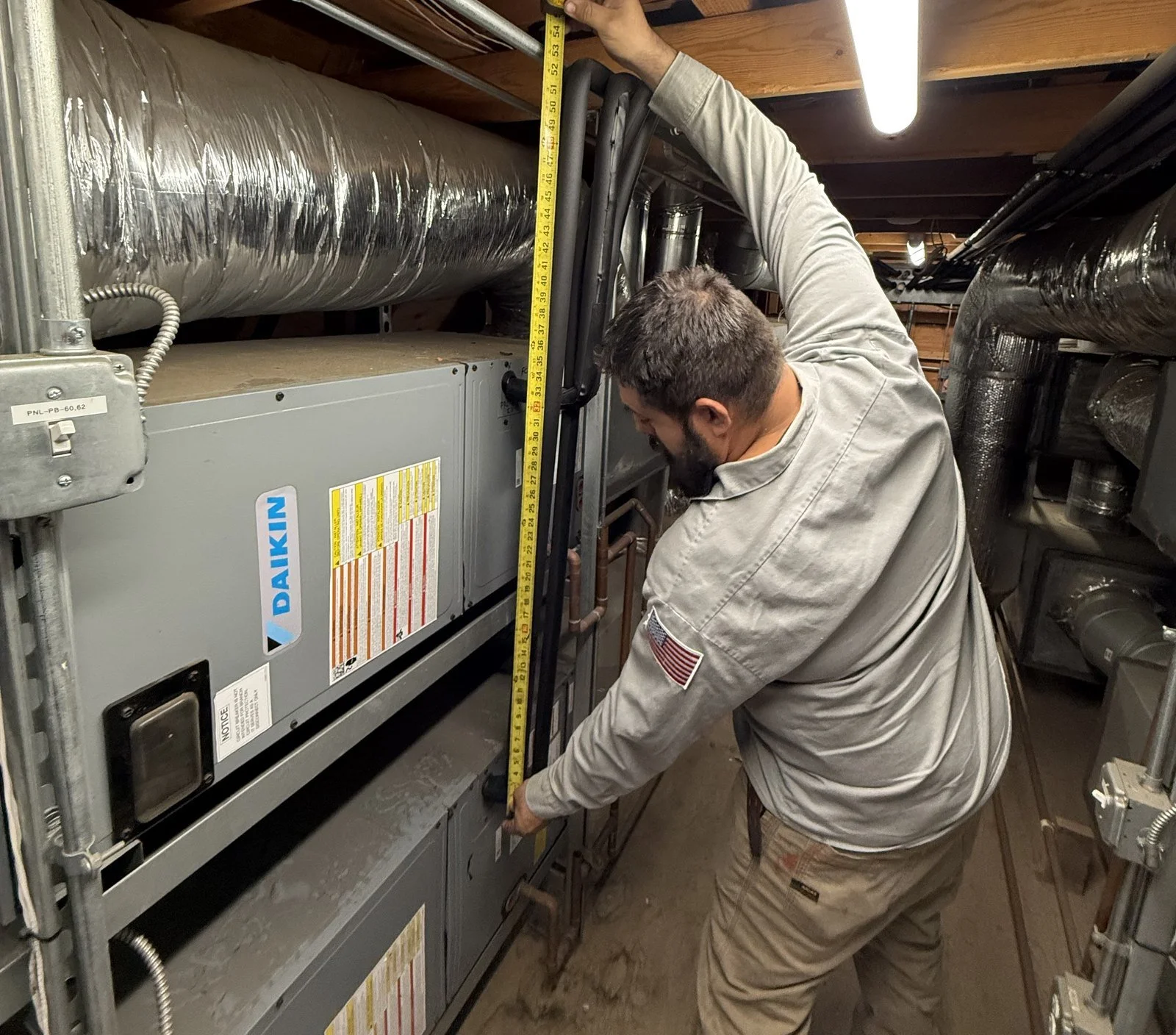
Care at the equipment.
A maintenance program should connect hands-on work with readings you can compare from visit to visit.
Request an HVAC Health AssessmentThe problem
A completed checklist proves a technician showed up.
It says nothing about whether your approach temperature drifted four degrees this year, or whether that nuisance alarm repeats on hot afternoons.
Essential CARE records a baseline. Proactive and Max CARE add repeat readings, trend comparisons and alarm review, so your report can explain what changed and which work deserves attention first.
The evidence
What CCMS trending looks like on a real plant
One central plant, November 2025 — covered at the time by another mechanical contractor’s standard preventative maintenance agreement.
Captured and saved instead of erased.
The survey that followed had proof to work from.
One unit’s cry for help. The fix was a controls change.
Hot-water leaving temperature ran against a 112°F setpoint while daily lows sagged into the 80s at season peak. Loss-of-flow and pressure alarms across all four heat pumps peaked at 158 in a single day. The alarm history was captured and preserved on November 26 rather than cleared — which is the only reason the pattern could be read at all.
The tiers
Three tiers. Pick your outcome.
| What you get | Essential | Proactive | Max CARE |
|---|---|---|---|
| Reliability review, operator training, response guidance | ✓ | ✓ | ✓ |
| Full yearly PM, quarterly inspections, and a baseline report | ✓ | ✓ | ✓ |
| Trend comparison across visits: what changed, and whether it matters | – | ✓ | ✓ |
| Alarm-history review with priorities ranked by risk | – | ✓ | ✓ |
| Training + Outage Playbook and Critical Spares | – | – | ✓ |
| Remote Technical Support throughout the agreement | – | – | ✓ |
| Priority response expectations, in writing | – | – | ✓ |
| Written guarantee | — | Trend Pledge | Response Pledge |
| Best fit when | stable assets, clean records | aging assets, recurring alarms | downtime is unacceptable |
Each tier includes everything to its left. Most sites with critical assets choose Proactive CARE.
The Trend Pledge
If a coming failure was visible in our trend data and we failed to flag it in your quarterly report, your next quarter of PM is free.
The Response Pledge
We answer your call within four business hours and have a technician on site within one business day, backed by the playbook and your on-shelf spares.
Not sure which tier? Get prescribed, don’t guess.
The free HVAC Health Assessment ends with a written PM prescription matched to your equipment’s age, setup, and importance. Sometimes the honest answer is a lower tier than you expected. An audit that only ever prescribes the expensive option is a brochure with a clipboard. Ours is covered by the Find-It-or-Free Guarantee.
Questions
The things people actually ask
How is this different from a normal PM contract?
Essential CARE records a maintenance baseline. Proactive and Max CARE add trend comparisons and alarm-history review, reporting what changed and which work deserves attention first.
What tiers are available?
Three: Essential, Proactive and Max CARE. The HVAC Health Assessment prescribes which tier the equipment actually needs.
What is the Response Pledge?
At the Max CARE tier, a call is answered within four business hours and a technician is on site within one business day.
Start with the free audit. Get your tier prescribed.
The audit leads to a review meeting with a written PM prescription. Then you decide. Sometimes the honest answer is a lower tier than you expected.
Request an HVAC Health Assessment
A senior technician reviews one critical HVAC asset. No cost for qualified facilities in the greater Bay Area.
Before scheduling: CCMS confirms site and equipment fit, then arranges customer/credit onboarding. This request does not book a visit or authorize paid work. Please do not include credit, financial, or patient records here.
