
Step 2B of 5 · Operator enablement
Owner Training
Help your facility operators recognize alarms, follow approved checks, and know when to call for service. Paid training built around your equipment and factory documents.
Does our team know what the factory expects?
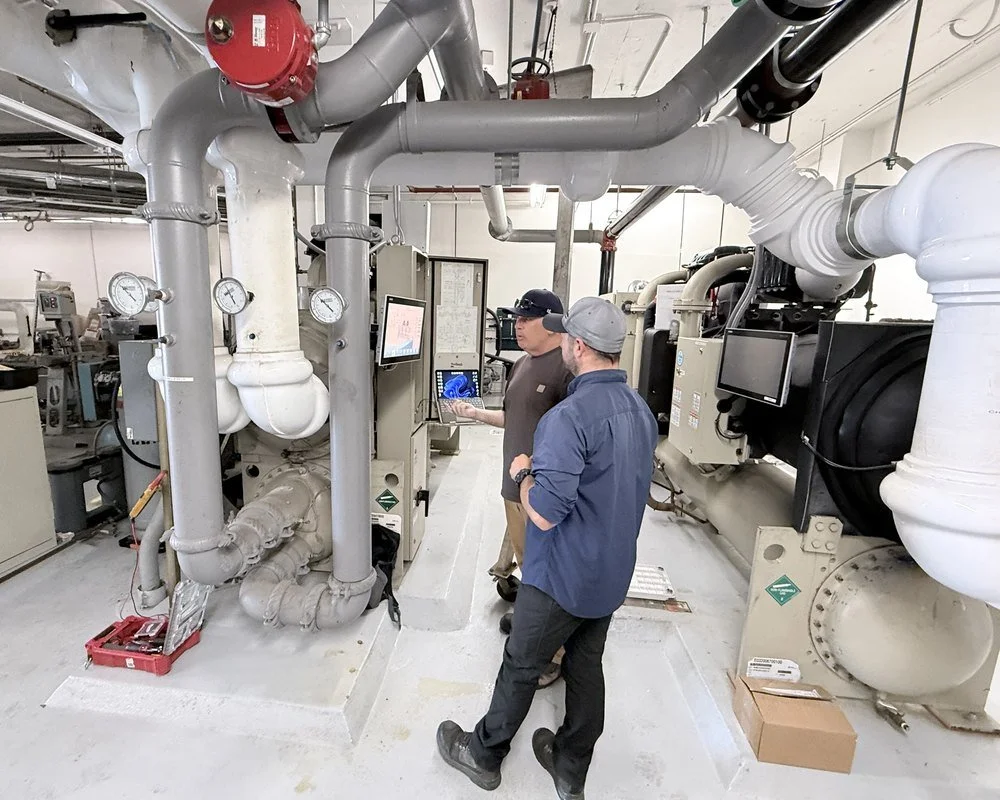
Classroom time on your OEM documents, then hands-on at the equipment, including A2L refrigerant safety. A ten-part workbook, tied to the factory manuals page by page, stays with your team.
Inside the deliverable
A training check you can inspect
Adapted from a CCMS owner-training draft. This blank example shows what an operator must demonstrate; it does not claim anyone has completed or passed training.
Find the reference
Locate the approved operating manual, alarm reference and site response plan for the equipment.
Record the condition
Identify the unit and record its displayed status and alarm, within the operator’s training and authority.
Know when to stop
Explain what must be escalated and who is authorized to make the next decision.
| Skill | Operator demonstration | Trainer verification |
|---|---|---|
| Locate the correct references | Not recorded | Not verified |
| Record the unit and alarm | Not recorded | Not verified |
| Explain escalation boundaries | Not recorded | Not verified |
About this example and its limits
Adapted with owner approval from the skills-verification format on page 15 of a supplied CCMS rooftop-unit owner-training draft. Site names, personal details, equipment identifiers, serial numbers and signature fields have been omitted. The source package is not published.
Each actual training package must use the applicable equipment documentation and site safety rules. Design values are not universal pass/fail limits. Electrical testing, panel access, fault resets and restart decisions are for appropriately qualified and authorized personnel. This example is neither a service procedure nor permission to operate or restart equipment.
The problem
Your equipment shipped with its own answers.
Most sites never open them until something breaks, and then nobody knows where to look.
Submittals describe the specified equipment. Factory manuals describe operation and service procedures. Training connects these references to the tasks your operators are authorized and qualified to perform.
This program works the other way around. We sit your staff down with the real factory documents for your real equipment. We work through them in a classroom, then go to the roof and put hands on the units. Your operators leave knowing what the factory expects and where to look the day something changes.
Checklists that show design values beside every reading.
Keep the specified design point, the field reading, and the approved acceptance criterion separate. A display range is not an acceptance limit.
The supplied rooftop-unit training draft includes a 13,620 CFM design point. That number is specific to the documented unit; it is not a limit for your equipment. The responsible technical reviewer must verify each site’s criteria before use.
Risk shows up on a clipboard long before it shows up as a failure. The same sheet lets you compare readings from visit to visit. It also holds anyone who touches the equipment, including us, to what the design calls for.
The documents keep working after we leave. Operators run daily, weekly, and monthly rounds. Service visits run quarterly and yearly checklists. Every reading is graded pass, caution, or fail.
The outcome
After the outage: what a trained operator does
Records the alarm and operating conditions, follows the site’s approved response plan, and escalates checks outside their training or authority.
Electrical testing, panel access and restart decisions belong to appropriately qualified personnel using the applicable factory procedure and site safety rules. This webpage is not a restart instruction or permission to reset a fault.
The economics
The program, priced three ways
Buy it as a bundle or piece by piece. Nobody pays for the same document twice.
The Training bundle is $9,995. Owner Training includes one year of technical support; Max CARE PM includes support throughout the agreement.
Compare itemized values, bundle prices and renewals
| Offer | Description | Value | Training bundle | Max CARE PM |
|---|---|---|---|---|
| HVAC Health Assessment | Free for sites that qualify | $2,500 | Included | Included |
| Training + Outage Playbook | Max CARE or on its own | $5,030 | Included | Included |
| Critical Spares Report | Tiers: Minimum Critical, High Impact, Max Uptime | $2,800 | Included | Included |
| CARE PM Program | Tiers: Essential, Proactive, Max CARE | — | Tiered | Tiered |
| Lifecycle Planning | A yearly planning session | $4,500 | Optional | Included |
| Remote Technical Support | Annual standalone subscription | $10,800 | First year included | Included throughout Max CARE PM |
| Owner Training | Tailored Training + 12 Month Review | $6,995 | Included | Included |
| Tailored Inspection Templates | Operator, yearly, and quarterly inspections | $2,850 | Included | Included |
| The whole system, added up | Added to your PM agreement | $35,475 | $9,995 | $0 |
Owner Training includes twelve months of Remote Technical Support; continued standalone support is $10,800 a year after that. Technical support remains included throughout your Max CARE PM agreement, with no separate support renewal charge. The Training bundle is $9,995.
The Verification Guarantee
Every trainee finishes with a skills check against the restart guide. Anyone who does not pass gets retrained at our expense. Training you cannot verify is theater, and we do not sell theater.
Put the design values in your operators’ hands
Buy it as a bundle or piece by piece. New to CCMS? The free HVAC Health Assessment shows you which equipment your team should learn first.
Request an Owner Training consultation
Training for your equipment and your operators. A paid program, scoped and quoted before you commit.
Four contact details to begin. Fields marked * are required. This request does not book training or authorize paid work.
